Five Driving Habits From Abroad That Could Save American Lives
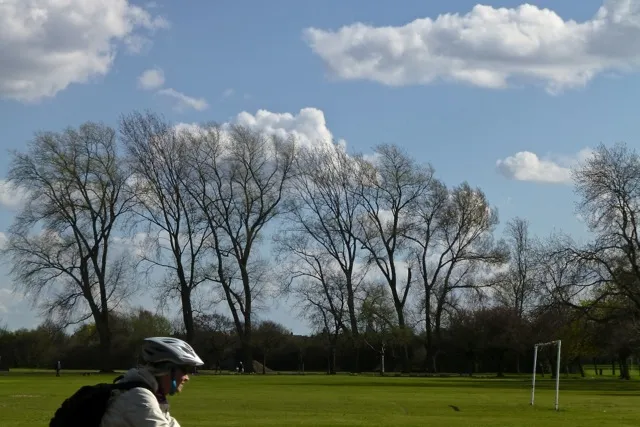
Photo: David Lally , CC BY-SA 2.0, via Wikimedia Commons
If you learned to drive in the United States, chances are nobody ever taught you how to open your car door. Sounds absurd, right? You've been opening doors your whole life. But there's an entire country that treats that simple act as a life-saving skill — and once you hear about it, you'll never open your door the same way again.
At Autoškola Džopková, we grew up in a European driving culture, and when we look at how Americans are taught to drive, we keep noticing the same thing: the fundamentals are there, but a handful of small, brilliant habits never made it across the Atlantic. Here are the ones worth stealing.
The Dutch Reach: A Door Opening Trick That Prevents Tragedy
In the Netherlands, drivers are taught to open their door with their far hand — the right hand, when sitting on the left side of the car. This forces your torso to twist, and suddenly you're looking over your shoulder at the mirror and the lane behind you.
Why does this matter? Because "dooring" — when a car door swings open into the path of a cyclist — kills and injures riders in every American city with a bike lane. In Chicago, a local campaign pushed the Dutch Reach after cyclist deaths, and it's slowly gaining traction. But in most US driver's ed programs? Never mentioned.
Try it tomorrow. It costs nothing, takes zero extra time, and might save someone's life.
Roundabout Manners: Yield to the Left, Signal to the Right
America has discovered roundabouts, but it hasn't quite discovered roundabout culture. In much of Europe, there's an unwritten choreography everyone follows: you yield to traffic already circulating (coming from your left), you enter decisively when there's a gap, and you signal as you exit so drivers waiting to enter know you're clearing the way.
In the US, roundabouts are often treated like four-way stops with anxiety — hesitant entries, no exit signals, and occasional full stops in the middle of the circle. The European habit of signaling your exit alone would untangle half the confusion at American traffic circles.
Slovakia's Hazard Anticipation: Narrate the Road
Slovak driving instruction is famously structured, and one of the pillars is systematic hazard anticipation. Students are trained to scan in a repeatable pattern — mirrors, road ahead, intersections, pedestrian zones — and to verbalize potential hazards before they materialize. A kid on a bike isn't "nothing"; he's a hazard until he's behind you.
American training tends to emphasize rules: speed limits, right of way, signal timing. Rules tell you what's legal. Anticipation tells you what's about to happen. The difference between the two is most collisions.
You can adopt this yourself with a simple exercise: narrate your drive out loud. "Pedestrian waiting at the crosswalk. Car braking three cars ahead. Driveway on the right." It feels silly. It also builds the scanning habit faster than years of silent driving.
Germany's Autobahn Discipline: The Left Lane Is for Passing
In Germany, cruising in the left lane isn't just rude — it's illegal. The left lane exists for passing, period. Once you've overtaken, you return right, even if you're driving fast.
Compare that to an American interstate, where the left lane is often a rolling blockade of cars matching speeds with the middle lane. "Left lane camping" causes brake checks, aggressive weaving, and road rage pileups. Adopting the German habit — pass, then move right — makes traffic flow smoother for everyone, including you.
The Scandinavian Winter Mindset: Practice Before You Need It
In Nordic countries and much of northern Europe, drivers don't wait for their first snowstorm to learn winter skills. Skid pads and controlled-slide practice are part of many licensing programs, because the philosophy is simple: you should meet an emergency in practice before you meet it in real life.
Even if you can't access a skid pad, the mindset translates. Find an empty parking lot after the first rain or snow and deliberately practice hard braking. Feel what ABS does. Learn how your car slides. Fifteen minutes of this is worth more than a decade of fair-weather luck.
Small Habits, Big Difference
Here's the thing about all of these practices: none of them require new laws, new technology, or a new car. They're habits — tiny, free, and learnable in an afternoon. The Dutch Reach takes one trip. Exit signaling takes one roundabout. Hazard narration takes one commute.
Europe didn't invent safer driving through better roads alone. It did it through culture — a thousand small habits passed from instructor to student until they became automatic. American drivers can borrow that culture one habit at a time.
So start with the door. Use the far hand. Look over your shoulder. And if you're a new driver looking to build these skills from day one, that's exactly what we teach — with a little European rigor and a lot of patience.