Behind the Tinted Glass: What Your Kid's Driving School Is (and Isn't) Showing You
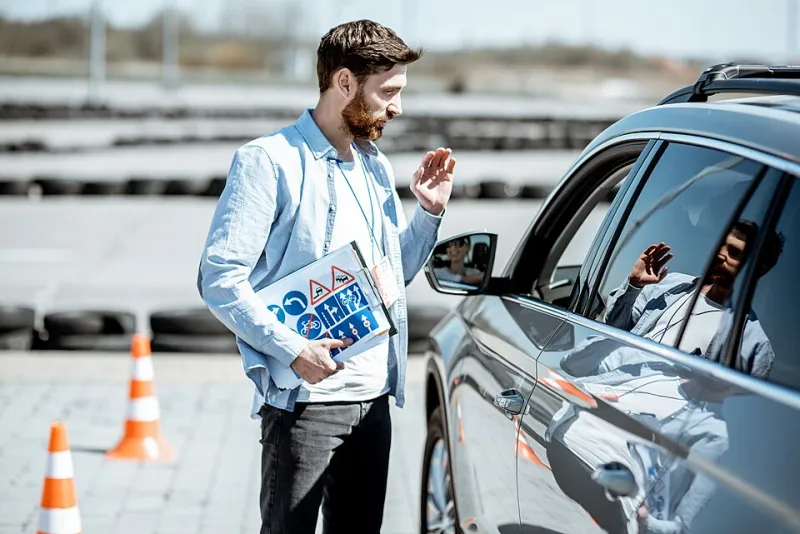
Photo: Triumphacademy, CC BY-SA 4.0, via Wikimedia Commons
You've spent sixteen years making sure this kid wore a helmet, looked both ways, and texted you when they got there. Now you're handing them to a stranger in a dual-control car, and the instructor suggests you wait in the parking lot.
Maybe that's fine. Maybe it's a red flag. The tricky part is that both are possible, and most parents have no way to tell the difference.
Why Schools Prefer an Empty Back Seat
There are legitimate reasons observation policies exist. A nervous teen performs differently when Mom is filming from the back seat — instructors see it constantly. Some students freeze up, others show off, and neither produces useful learning. There's also a practical issue: most training cars simply seat two comfortably, and a third passenger changes the cabin dynamics.
In countries with more structured driver education — Slovakia, Germany, Finland — instructor accountability works differently. Lessons follow a national curriculum with documented hours and standardized exams, so the system itself provides oversight. In much of the US, where requirements vary wildly by state, the instructor is the quality control. Which is exactly why parents ask fair questions about what happens behind that tinted glass.
The Difference Between Privacy and Secrecy
Here's the distinction worth internalizing: a good school protects the student's focus during the lesson and then opens the books afterward. A problem school protects itself at every stage.
Ask a school how you'll know what your teen practiced. If the answer is a written lesson summary, a skills checklist tied to a curriculum, or an invite to ride along on a later lesson — that's a school confident in what it teaches. If the answer is a shrug and "trust us, we've been doing this twenty years," you've learned something too.
Questions to Ask Before You Pay
Run any prospective school through this list:
- Can I see the lesson plan? Not a brochure — the actual skills progression, lesson by lesson.
- How do you report progress? Written feedback after each session should be standard, not a luxury.
- Is observation ever allowed? Some schools say no to lesson one but yes to a later session, or to a final review drive. A flat no with no explanation deserves a follow-up question.
- What are your instructors' credentials? State certification is the floor, not the ceiling. Ask about years teaching, continuing education, and turnover.
- What's your pass rate, and how do you handle a student who struggles? Schools that only celebrate easy students are selling you luck.
- What car will they learn in, and how new is it? Modern safety features matter, and so does maintenance.
- What happens if my kid doesn't click with the instructor? Fit matters enormously for anxious beginners.
Red Flags That Warrant Pushing Back
Some policies are preferences; others are warnings. Be skeptical when you see:
- No written record of what was taught, ever
- Instructors who can't or won't describe their teaching approach in plain language
- Pressure to buy a large package upfront before you've seen a single lesson
- A training car that looks neglected — tires, brakes, and cleanliness tell you how the school feels about safety
- Vague or evasive answers about insurance and licensing
- Pricing that seems dramatically below market, which often means underpaid instructors and high turnover
And one more that parents overlook: a school that badmouths every competitor. Confidence sounds like specifics, not smear campaigns.
When You Should Insist on Watching
Most of the time, respect the process and read the reports. But there are situations where pushing for observation — or at least a detailed debrief — is the right call:
- Your teen has anxiety or a learning difference, and you need to know how it's being handled
- You're considering an expensive multi-lesson package and want to verify quality before committing further
- Your teen's feedback and the school's reports don't match up
- The instructor is young, newly certified, or you've heard mixed reviews locally
Even if the school holds firm on observation, they should be able to tell you what was covered and how well — in writing, every time. That's not an unreasonable ask. It's the minimum.
The Bigger Picture
The schools worth your money treat parents as partners, not obstacles. They document everything, welcome your questions, and understand that you're not trying to micromanage the lesson — you're trying to make sure the person teaching your child to survive on the highway is actually good at it.
Drop them off. Let them learn without an audience. But pick a school that acts like it has nothing to hide, because the best ones genuinely don't.