Your Brain Doesn't Learn to Drive in Big Chunks: The Case for 20-Minute Practice Sessions
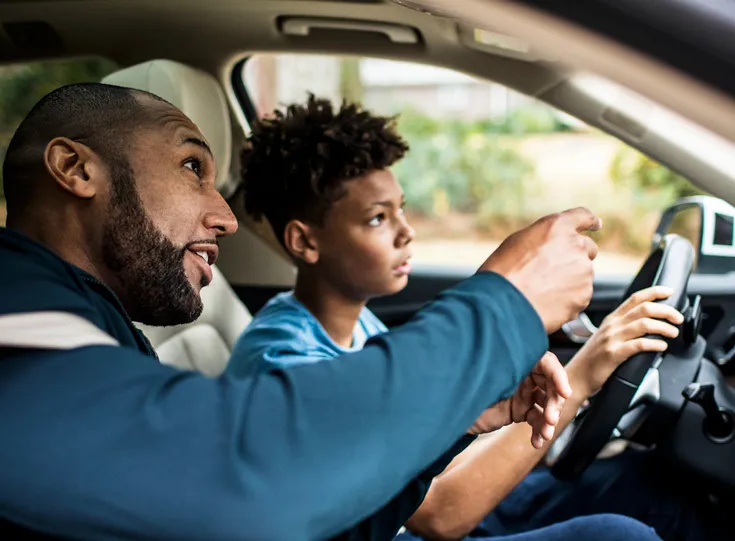
Photo: teen learner driver practicing parking with parent in passenger seat, via www.ace.aaa.com
Picture this: it's Saturday morning, you've got four free hours, and your uncle agreed to ride along while you practice. By hour two, you're fried. By hour three, your uncle is fried. By hour four, you've both quietly agreed to get lunch and call it a day.
Now compare that to 20 focused minutes every evening for two weeks. Same total time on the road — wildly different results.
This isn't a hunch. It's one of the most reliable findings in motor skill research, and it's the quiet reason driving schools in Slovakia and much of Europe structure lessons the way they do: short, dense, repeated, and spread out. American learner drivers, who often depend on informal practice with parents, tend to do the opposite. Let's fix that.
What Skill Science Actually Says
Researchers who study motor learning — the kind of learning behind steering, braking, and clutch control — have known for decades that distributed practice beats massed practice. In plain English: spreading the same amount of practice across many sessions produces stronger, more durable skills than cramming it into a few long ones.
Why? A few reasons:
- Sleep does the consolidation work. Your brain replays and hardwires new motor patterns overnight. Practice Monday, drive again Tuesday, and you're building on a consolidated foundation. Practice for five hours straight and much of the later time is spent reinforcing fatigue, not skill.
- Spacing creates retrieval. Every time you return to the car after a gap, your brain has to recall the skill, not just repeat it. That retrieval effort is what makes learning stick.
- Fatigue is the enemy of good habits. After about 20–30 minutes, new drivers get sloppier — slower checks, later braking, heavier hands. Practicing sloppy driving just rehearses sloppy driving.
There's also the boredom factor. Long sessions make practice feel like a chore, and chores get canceled. Twenty minutes? That's an episode of a sitcom. It actually happens.
The Slovak Model: Density Over Duration
At a typical Slovak driving school, lessons aren't epic cross-country expeditions. They're regular, structured sessions — often 45 minutes to an hour, several times a week, with each lesson targeting one specific skill: parking one day, roundabouts the next, night driving later on.
The philosophy is simple: you don't learn to drive by driving a lot at once. You learn by driving often.
American teens usually can't replicate that structure — professional lessons are expensive, and school schedules are brutal. But the principle translates perfectly to informal practice. You don't need a driving school. You need a car, a licensed adult, and 20 minutes a day.
Your Four-Week Bite-Sized Practice Plan
Here's a realistic plan for a learner with a permit, access to a car, and a willing adult. Adjust for your state's requirements, but the shape stays the same.
Week 1: The Same Loop, Every Day
Pick a quiet 10-minute loop near home — residential streets, one stop sign, one light. Drive it every day for 20 minutes.
The repetition is the point. You're not learning roads; you're learning the car. Steering smoothness, pedal feel, mirror checks. Your adult passenger's only job this week: keep you calm and call out anything you miss.
Week 2: Add One New Stress Per Day
Keep the loop but change one variable daily — Monday it's dusk, Tuesday it's light rain, Wednesday you take a slightly busier road home. One change at a time, never two.
This mirrors how good instructors sequence lessons: isolate the challenge so your brain can actually process it.
Week 3: Parking Week (Yes, Every Day)
Twenty minutes of parking daily sounds miserable. It's actually the fastest win in driving. Day one: pull-in parking in an empty lot. By day five: parallel parking on a real street. Daily repetition turns the most feared test maneuver into muscle memory.
Week 4: Mini Trips With a Purpose
Short errands — the pharmacy, a coffee run, school pickup. Real destinations give practice real stakes without pressure. Twenty minutes each, most days, ideally at different times of day.
A Few Ground Rules for Your Adult Co-Pilot
The person in the passenger seat matters as much as the plan. Brief them:
- Keep commentary minimal during the drive. Save feedback for after.
- End on a success. Finish each session with something you do well. It cements confidence alongside the skill.
- Never extend a bad session. If it's going sideways at minute 12, stop at 15. A bad 40 minutes teaches worse habits than a good 15 teaches good ones.
Why Short Sessions Also Help on Test Day
Road examiners aren't evaluating exotic skills. They're evaluating consistency — smooth, automatic habits under mild pressure. Skills built through daily short practice are exactly that: automatic. Skills built through four marathon Saturdays are fragile, because they were rehearsed in a state of rising fatigue and stress.
There's a bonus, too: daily short drives normalize being behind the wheel. Test day stops feeling like a performance and starts feeling like Tuesday.
The Bottom Line
If you remember one thing, make it this: frequency beats duration, every time. Twenty minutes today is worth more than two hours on Saturday. It's the same insight driving schools across Europe built their entire model on — and it's one you can steal for free, starting tonight, in the empty parking lot down the street.
Grab the keys. Set a timer. Twenty minutes. That's the whole assignment.