The Quiet Co-Pilot: A Parent's Field Guide to Supervised Practice Drives
Photo: Oregon Department of Transportation, CC BY 2.0, via Wikimedia Commons
Somewhere between the parking lot and the first real road, every parent discovers a hidden talent for saying "BRAKES" in a voice their teenager will remember for a decade. It's not your fault. Nobody handed you a manual for this job — and it is a job, especially if you're logging the supervised hours most US states require before a teen can get a full license.
At Autoškola Džopková, we spend a lot of time watching instructors work, and the thing that stands out is how quiet they are. Not silent — calm. The best co-pilots in a practice car aren't narrating every mistake. They're managing the drive like a project, one small goal at a time. Here's how to steal that approach.
Adjust the Seat Before You Adjust the Expectations
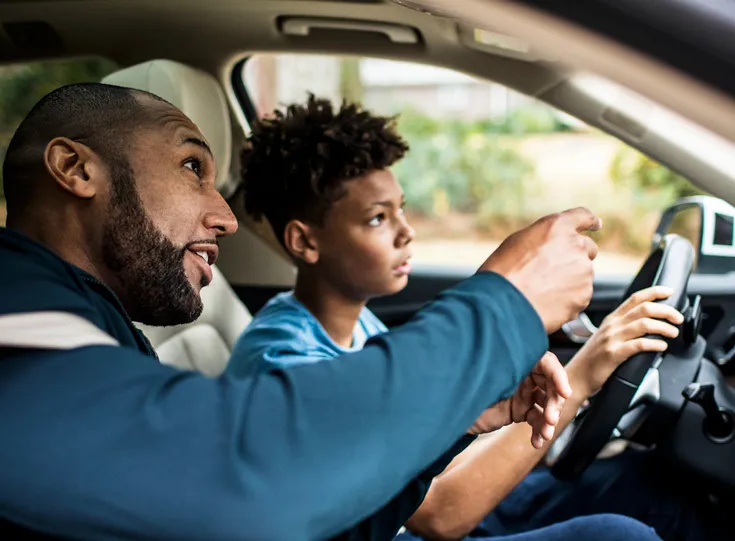
Your job in the passenger seat is a specific role: extra eyes, calm voice, and a legal requirement in most states. You are not the instructor, the DJ, or the emergency brake.
Before your first drive together, agree on three things:
- Where you'll practice. Empty lots and quiet residential streets first. The highway comes later, and never on a drive where either of you is already having a bad day.
- What "stop the car" means. Pick a phrase — "pull over, please" works — that means end the session immediately, no debate. It's not a punishment; it's a reset button.
- When you'll critique. Mistakes get discussed after the drive, parked, in the driveway. In the moment, your teen needs forward information, not a replay.
The Words That Keep the Car Calm
Backseat driving isn't about volume. It's about timing and vagueness. "Watch out!" tells your teen nothing except that something scary is happening. Compare:
| Instead of | Try |
|---|---|
| "Watch out!" | "Bike on your right." |
| "Slow down!" | "Speed limit here is 25." |
| "You're too close!" | "Give the car ahead more space." |
| "BRAKE BRAKE BRAKE" | "Ease off the gas." (early, not late) |
Notice the pattern: name the hazard or the action, early, in a flat voice. If you feel your heart rate climbing, that's your cue to simplify — fewer words, calmer tone. Your teenager is reading your body language as closely as the road.
A Session-by-Session Script
Structure beats improvisation. Here's a progression you can stretch across several weeks of practice drives:
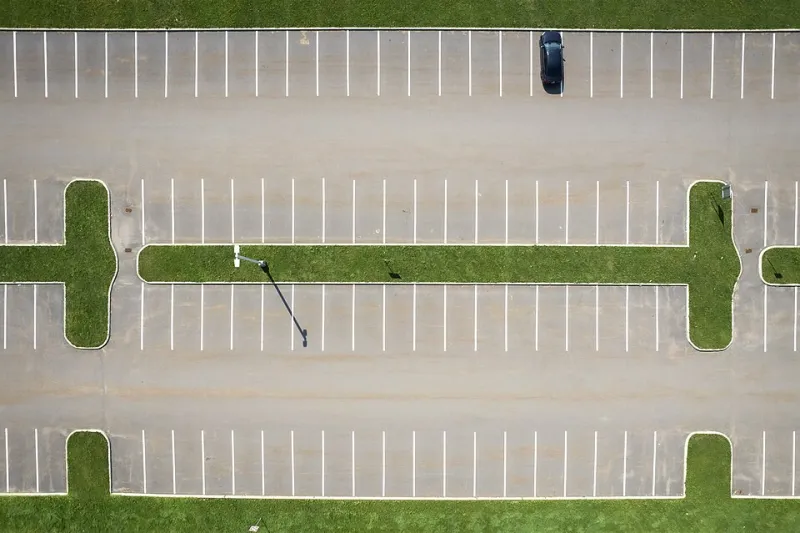
Sessions 1–2: The parking lot. Goals: starting, stopping, smooth steering, parking. Your only lines: "Pull forward to that cone." "Now reverse straight back." Keep instructions given before the action, not during.
Sessions 3–5: Quiet neighborhoods. Add turns, stop signs, and scanning. Script: "Next left when it's safe — your call." Giving your teen the decision is the whole point. You're auditing, not commanding.
Sessions 6–10: Busier streets and dusk driving. Introduce lane changes, unprotected lefts, and heavier traffic. New rule for yourself: narrate hazards, not driving. "Pedestrian ahead at the crosswalk" — then silence, and let them handle it.
Later sessions: The highway and the rain. Merging, following distance, and night driving only once the fundamentals feel boring to both of you. Boring is the goal. Exciting practice drives are a sign you moved too fast.
The Debrief: Two Minutes, Three Questions
After every drive, parked and parked safely, ask:
- "What felt hardest today?"
- "What would you do differently?"
- "What do you want to work on next time?"
Then add one thing you noticed — one, not five — and end on something they did well. This two-minute ritual turns tense drives into a training log, and it trains you too: you'll start noticing that your feedback gets shorter, more specific, and much better received.
Know When to Hand Them Off
There's an honest limit to what parents can teach. If your teen flinches at your voice, if sessions end in arguments more often than not, or if you've hit a skill plateau together — that's not failure. That's a signal that a professional instructor, with neutral authority and dual-control pedals, can break through where you can't. Mixing professional lessons with your supervised hours is the model most of Europe uses, and it works: the instructor handles technique, you handle mileage.
Fifty hours sounds like a sentence. Structured right, it's fifty hours of your kid getting genuinely good at something before you ever have to hand over the keys alone. Breathe. Name the hazard. Let them drive.