Ten Hours of Empty Parking Lot: The Self-Taught Driver's Skills Ladder
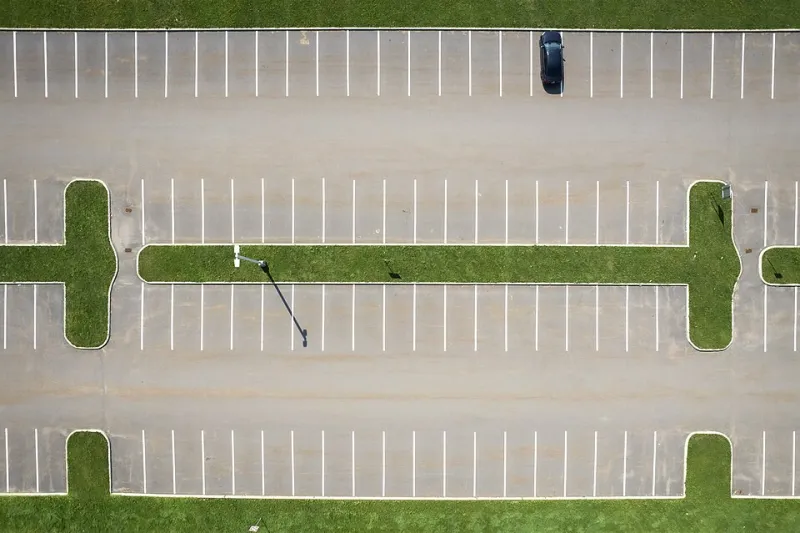
Photo: Gabriel Picard, CC BY-SA 4.0, via Wikimedia Commons
Not everyone can sign up for a full course of professional lessons right away. Maybe you're sixteen and the budget only stretches so far. Maybe you're an adult who's been putting this off for years and you want to build some baseline confidence before paying an instructor to watch you stall. Either way, there's one resource most new drivers completely overlook: the vast, empty, gloriously boring parking lot.
At our driving school, we tell students that the difference between a nervous beginner and a road-ready one isn't talent — it's structured repetition. And structure is something you can absolutely give yourself. Here's how to turn roughly ten hours of empty asphalt into a real foundation.
Ground Rules Before Hour One
Three things before you start. First, bring a licensed, patient adult — someone who won't grab the dashboard and sigh. Second, pick your lot wisely: a school or church parking lot on a Sunday morning, or a big-box store lot before opening. Third, bring your own props — a bag of traffic cones (or old cardboard boxes work fine) will do more for your skills than hours of aimless circling.
Hours 1–2: Getting Comfortable With the Machine
Don't drive anywhere yet. Sit in the driver's seat and touch everything. Adjust mirrors until you can see your own car's rear corners just barely. Find the friction point on the clutch if you're driving a manual, or practice smooth throttle application on an automatic.
Spend these two hours doing slow, deliberate loops around the lot perimeter. That's it. Your goal is that the physical act of steering, braking, and accelerating stops requiring conscious thought. When you can hold a steady 10 mph in a straight line without your shoulders creeping up to your ears, move on.
Hours 3–4: The Cone Course
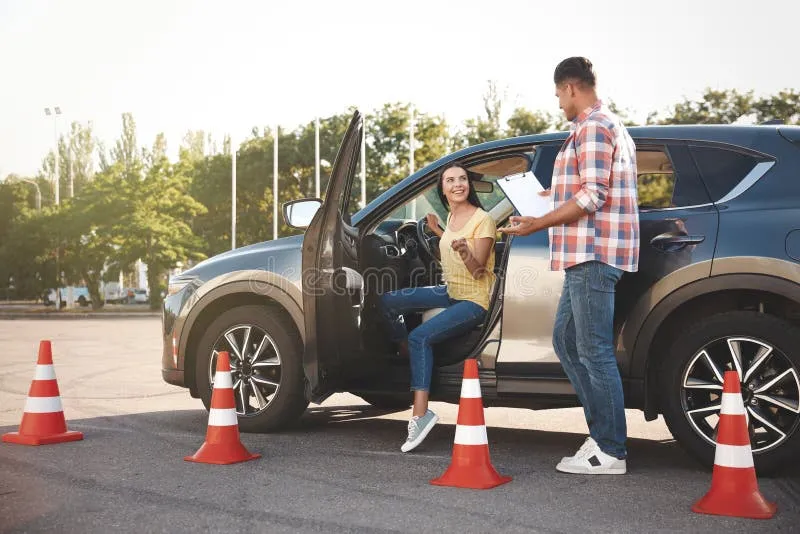
Now the cones earn their keep. Set up a simple slalom — six markers, spaced about two car lengths apart — and weave through them. Then space them tighter. Then try it in reverse.
Reverse anything is where new drivers fall apart, because your brain wants to steer the direction the car is going rather than the direction the nose swings. Fifteen minutes of slow reverse slalom will teach you more about steering geometry than a week of lectures. Add a figure-eight around two cones for good measure.
Hours 5–6: Parking, For Real This Time
With a friend's car (or two boxes) as obstacles, practice parking in actual spaces: pull-in perpendicular, pull-in angled, then — the boss fight — reverse parking. Back into a space between two cars five times in a row without correction. If you can reverse-park confidently, parallel parking on a quiet street later will feel like a formality rather than a horror movie.
Also practice pulling out of spaces while pedestrians could theoretically be present. Shoulder checks and mirror use should become automatic here, not later.
Hours 7–8: Braking Like You Mean It
In a big empty lot, practice two things. First, smooth progressive braking: from 20 mph down to zero without your passenger's coffee surviving or spilling. Second, an emergency stop — from about 20–25 mph, brake as hard as the car allows while staying in your lane. Do this a handful of times in a straight line, on dry pavement.
Most drivers go their whole lives without ever experiencing full-force braking. Knowing what it feels like — the seatbelt locking, the nose diving, the car actually stopping — removes the panic from the first real emergency you'll ever face.
Hours 9–10: The Mock Drive
Tie it all together. Have your adult call out a random sequence: "Slalom, reverse into that space, drive to the far end and stop smoothly at this cone like it's a stop sign." Add a three-point turn between rows. Practice stopping at a cone placed like an intersection, looking left-right-left, then proceeding.
You're no longer practicing skills. You're practicing decisions, which is what driving actually is.
When Are You Ready for Real Streets?
Honest checklist: Can you reverse-park between cars in one attempt? Can you emergency-brake without swerving? Does your foot move to the brake without your brain's involvement? Can you hold a conversation while driving smoothly?
If yes to all four, quiet residential streets are calling — Sunday morning, low traffic, and ideally still with your adult. If no, you've got a specific skill to name and drill, which is exactly the point. Empty-lot practice isn't a consolation prize for people without lessons. Done with intention, it's the foundation every good driver secretly wishes they'd built first.