Ten Hours in a Stick Shift: The Cheapest Insurance Policy You'll Ever Buy as a Driver
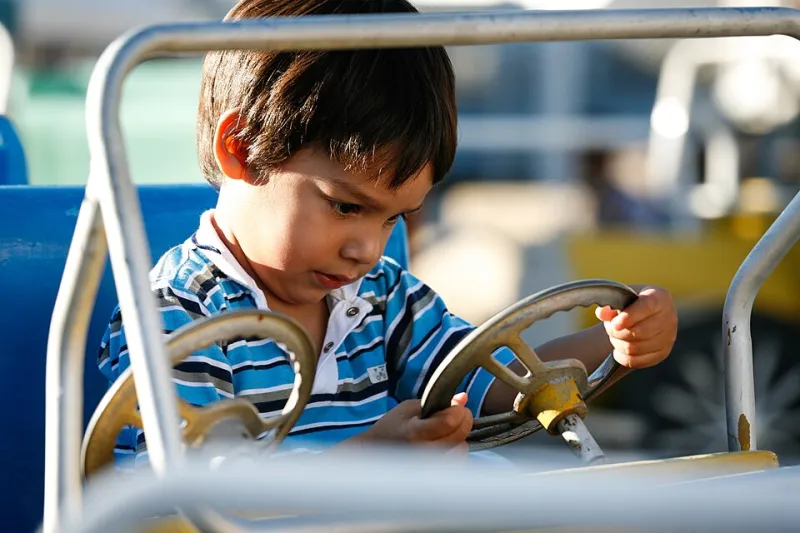
Photo: Alex Proimos from Sydney, Australia, CC BY 2.0, via Wikimedia Commons
Let's be honest about how most Americans learn to drive: you get in, you put it in D, and you go. Two pedals. One direction. The car handles the rest. It's convenient, it's comfortable, and it's quietly leaving enormous holes in your understanding of what a car actually does.
At our driving school, every student learns on a manual before they're allowed near an automatic. It's not nostalgia. It's not European stubbornness. It's because a stick shift teaches you things about car control that simply cannot be taught any other way — and American licensing rules mean most new drivers will never encounter them.
The Hill Start You've Never Actually Done
Here's a scenario that terrifies every new manual driver and teaches every one of them something permanent: you're stopped on a steep San Francisco-style incline, traffic behind you, and you have to pull away smoothly without rolling backward into anyone's bumper.
In an automatic, this problem doesn't exist. The torque converter holds you in place. You press the gas and go. You've never had to feel the friction point, never had to balance a clutch against a brake, never had to think about gravity as an opponent.
A manual driver learns hill starts in week two because they have no choice. And that skill transfers. The automatic driver who someday rents a car abroad, borrows a friend's truck with a trailer, or ends up in an emergency with an unfamiliar vehicle will be starting from zero. The manual driver starts from experience.
Your Engine Is a Brake. You Just Never Met It.
Most American drivers have no idea what engine braking feels like, because the torque converter absorbs it all. Down a long mountain grade — think I-70 through the Rockies or any of the passes in the Sierra Nevada — your automatic will happily ride the brakes until they overheat, fade, and possibly fail. Your brake pedal becomes the only tool you have.
A manual driver drops a gear and lets the engine slow the car. The brake pedal stays cool. The descent stays controlled. This isn't a racing technique; it's basic car control that used to be common knowledge and has now become specialist information.
The same goes for winter. Downshift before a slick corner instead of braking into it, and you'll feel the difference immediately. Smooth deceleration through the drivetrain is one of the best traction-preserving tools available — and roughly zero percent of automatic-only drivers have ever used it.
What the Clutch Actually Teaches You
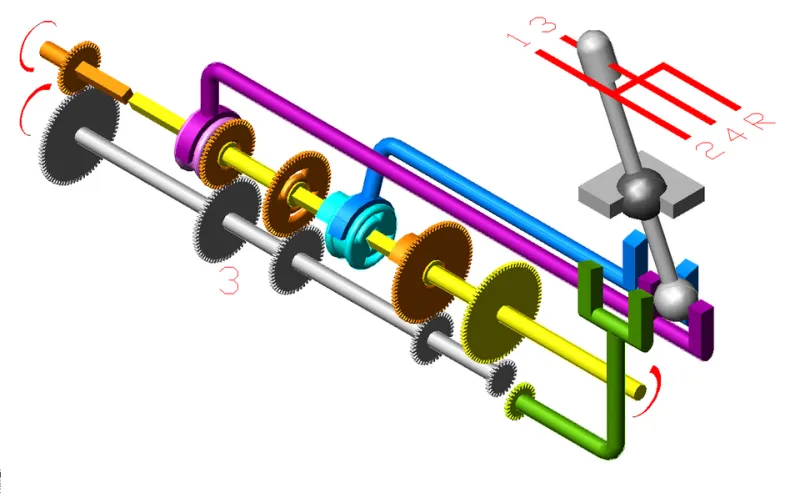
Beyond the specific skills, there's a deeper thing happening. A manual transmission forces you to develop a physical relationship with the machine. You feel the engine's rev range. You know what 2,000 RPM sounds like versus 4,000. You sense when the car is lugging or straining because your left foot and right hand are in constant conversation with it.
That sensitivity doesn't stay behind in the manual car. It comes with you. Automatic drivers who've spent time in a stick shift brake earlier, steer smoother, and generally drive like people who understand that a car is a machine with momentum, not an appliance with wheels.
The Rental Car in Lisbon Problem
Here's the practical kicker: manual transmissions still dominate most of the world. Head to Europe, South America, or much of Asia, and the economy rental car — the cheap one, the available one — will very likely have three pedals. Rent a car in rural Ireland or Italy's hill towns and an automatic-only license isn't just an inconvenience. In some countries, your license category literally restricts you to automatics.
Meanwhile, in the US, manual cars are also the hardest to steal, often cheaper to maintain, and — fun fact — the last remaining stick shifts are holding their resale value precisely because so few people can drive them.
The Ten-Hour Prescription
You don't need to become a manual devotee. You don't need to buy one. You need about ten hours.
That's enough to internalize clutch control, hill starts, downshifting, and rev matching at a basic level. Enough that the skill lives in your hands permanently, like riding a bike. Here's how to spend them:
- Hours 1–3: Flat, empty parking lot. Launching, stopping, finding the friction point until it's boring.
- Hours 4–6: Quiet residential streets. Shifting up through the gears, gentle downshifts, stopping and starting at signs.
- Hours 7–8: Hills. Real ones. Repeated starts on grades until the rollback panic dies.
- Hours 9–10: Light traffic. Because stalling at a light with a line of cars behind you is its own education.
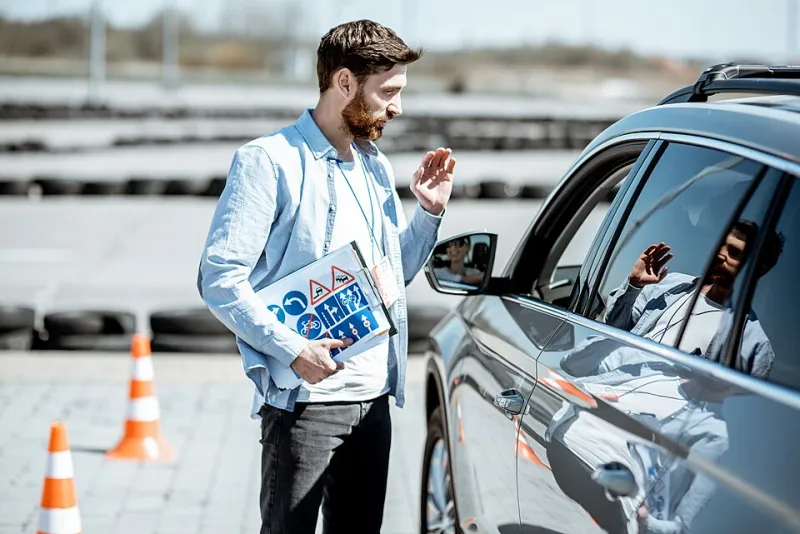
Find a friend with an old beater, book a few lessons with an instructor who still teaches stick, or — if you're shopping for your first car anyway — consider whether your first ten hours should happen before you sign anything.
Easier Isn't the Same as Better
Nobody's arguing you should commute in a manual for the rest of your life. Automatics are wonderful, and in stop-and-go traffic, they're the sane choice. The argument is simpler: the default shouldn't be the ceiling. A driver who's only ever pressed two pedals knows less about their car than one who's mastered three — and that knowledge gap shows up exactly when it matters most: on a mountain descent, on ice, on a hill with a stranger's bumper two feet behind you.
Ten hours. One clutch. Skills no automatic will ever teach you. That might be the best trade in all of driver education.