The Yield Is Not a Dare: A Slovak Instructor's Notes on the American Roundabout
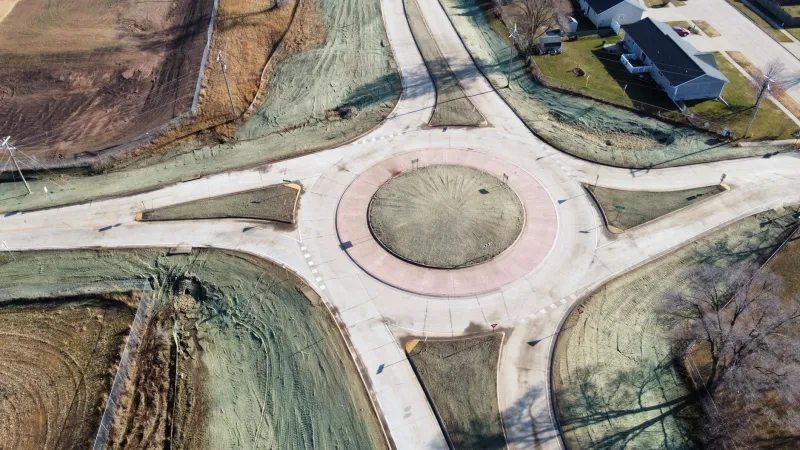
The first time I watched an American driver approach a roundabout, I thought the car had stalled. The driver slowed to a crawl, looked left, looked right, looked left again, and then stopped entirely at the yield line. There was no traffic. There was no reason to stop. But the driver sat there like a person waiting for a permission slip that was never going to arrive.
I understood the feeling. I have taught drivers in Slovakia, where roundabouts are as ordinary as stop signs, and I have watched American drivers treat a traffic circle like a riddle. The difference is not that Europeans are braver. It is that we learn the decision sequence early, and we practice it until it stops feeling like a decision at all.
A Circle Is Just an Intersection With the Corners Rounded Off
That is the first thing to understand. A roundabout is not a free-for-all. It is an intersection where the rules have been rearranged. Instead of stopping and taking turns, you yield and flow. Instead of a green light telling you when to go, you read the traffic and choose your moment.
For a driver raised on four-way stops, that feels like a loss of structure. But the structure is still there. It is just written in yield signs instead of traffic lights.
Why the Freeze Happens
American drivers are trained on a first-come, first-served model. At a four-way stop, the rule is clear: the person who arrived first goes first. At a roundabout, there is no first. There is only a circulating stream of traffic and a gap that either exists or does not.
That ambiguity is what freezes people. The driver is not afraid of the circle. The driver is afraid of making a social mistake — cutting someone off, hesitating too long, or entering when they should have waited. The irony is that the hesitation itself creates the danger. A driver who stops at an empty roundabout teaches the person behind them to expect the unexpected.
The Decision Sequence at a Multi-Lane Roundabout
A multi-lane roundabout looks complicated because there are more paint lines. But the sequence is the same. Here is how I teach it.
Step 1: Choose Your Lane Before You Enter
Know where you are going before you reach the circle. If you are taking the first exit, stay right. If you are going straight through, the right lane often works, but check the signs. If you are taking a later exit, move left before the roundabout, not inside it. Lane changes inside a roundabout are how people end up circling twice.
Step 2: Approach at a Speed That Lets You Read the Circle
Do not arrive at 45 mph and expect to process three lanes of traffic. Slow down enough to see the gaps. That does not mean crawl. It means approach with your eyes up and your foot ready.
Step 3: Yield to Traffic Already Circulating
This is the whole rule. You yield to cars already in the roundabout. You do not yield to cars that are not there yet. You do not yield to the car behind you. You do not yield to your own anxiety.
Step 4: Enter When the Gap Is Real
A real gap is one where you can enter without making the circulating driver brake. If you have to guess, wait. If you have to slam the gas, wait. If you can enter smoothly and stay in your lane, go.
Step 5: Signal Your Exit
Signal right before your exit. This is not optional in Slovakia, and it should not be optional here. It tells the driver waiting at the next entry that you are leaving, which means they can go.
Step 6: Do Not Stop Inside the Circle
Stopping inside a roundabout is like stopping in the middle of a moving walkway. You become an obstacle. If you miss your exit, go around again. It is not a failure. It is a lap.
The Myth: 'Nobody Yields'
This is the myth I hear most often from American drivers. 'In a roundabout, nobody yields.' That is not true. What is true is that yielding looks different from stopping. A European driver approaching a roundabout is already adjusting speed, looking left, and preparing to enter or wait. The yield is a negotiation, not a dare.
The dangerous driver is not the one who yields. The dangerous driver is the one who stops when they have the right of way, or enters when they do not. Both come from the same place: not understanding that the roundabout is a flow, not a queue.
A Progressive Practice Route
You do not go from zero to a busy multi-lane circle in one day. Build up.
Start with an empty suburban roundabout — the kind in a new housing development or an office park on a Sunday morning. Drive it ten times. Practice lane choice, signaling, and exit. There is no traffic, so you can focus on the sequence.
Then move to a two-lane roundabout at off-peak hours. Practice entering from different approaches. Notice how the gap changes depending on which lane you are in.
Finally, try a busy roundabout with a supervising driver. The goal is not to be fast. The goal is to be smooth. Smooth drivers make roundabouts boring, and boring is exactly what you want.
What Slovakia Gets Right — and What It Does Not
Slovakia does not produce naturally gifted roundabout drivers. We produce drivers who have practiced the same sequence hundreds of times, often with an instructor who will not let us stop at an empty yield line. The system works because the repetition is built into the learning process.
That is the lesson for American drivers. You do not need a different personality. You need a quiet Sunday morning, an empty circle, and someone to remind you that the yield is not a dare. It is a decision. And once you know the sequence, the decision gets a lot easier.